
US Military Urges Trump: More Time Needed Before Iran Strikes Amid Fiery Protests | The GPM

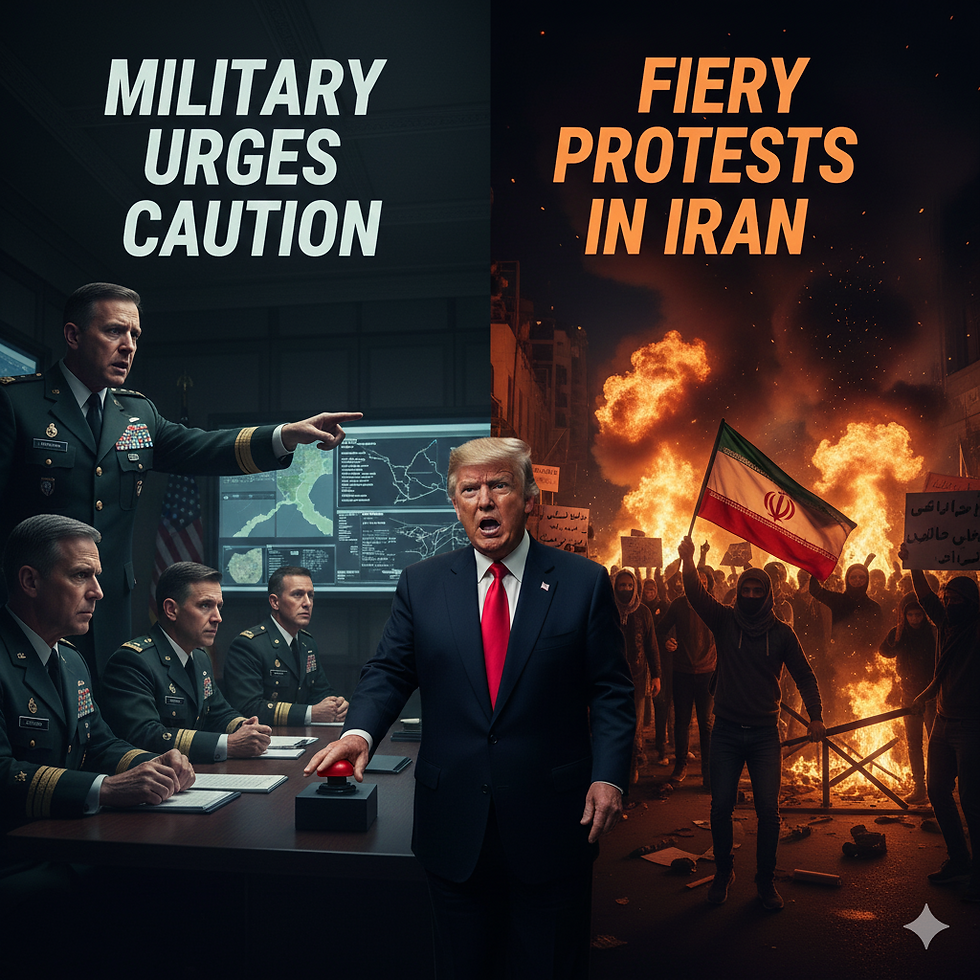
The US military needs more time to prepare for any potential strikes against Iran. That's the stark warning Donald Trump has received amid escalating tensions. As protests erupt for another night across the country, the situation feels like a powder keg ready to ignite.
Trump, back in the White House spotlight, faces mounting pressure to act decisively. Yet military advisors are urging caution, emphasizing that rushing into conflict could lead to disaster.
Protests in Iran have intensified over the past week, drawing thousands into the streets of Tehran and other major cities. Demonstrators chant against government corruption and economic hardship, their voices amplified by social media clips spreading worldwide. Security forces have responded with tear gas and arrests, but the crowds keep coming back night after night.
This unrest comes at a precarious moment for the region, with Iran's nuclear program under fresh scrutiny from the international community.
Trump has long criticized Iran's activities, calling them a threat to global stability.Sources close to the Pentagon say Trump was briefed during a late-night call from top generals. They outlined logistical hurdles that make immediate action unfeasible.
Moving aircraft carriers into position takes weeks, not days. Supply lines for precision munitions need careful coordination across vast distances. Intelligence on Iranian defenses remains patchy, with air defenses bolstered by Russian technology. One advisor reportedly told Trump, "We are not ready for primetime."
The message was clear: haste could expose US forces to unnecessary risks and invite retaliation.Trump's rhetoric has not helped calm the waters. In recent rallies and posts on Truth Social, he has vowed to confront Iran head-on if they cross certain lines. "Iran will pay a heavy price," he declared last week, echoing his first term's maximum pressure campaign. That approach included withdrawing from the nuclear deal and ordering the strike that killed General Qasem Soleimani.
Now, with protests signaling internal weakness in Tehran, some hawks in Trump's circle see an opportunity to exploit the chaos. But others warn it could backfire, rallying Iranians around their regime.The protests themselves trace back to broader grievances. Skyrocketing inflation has crushed the middle class, while youth unemployment hovers near 30 percent. Women lead many marches, frustrated by strict moral policing and limited freedoms. Satellite images show damage from clashes in Isfahan and Shiraz, where protesters torched police vehicles. Iran's Supreme Leader Ali Khamenei blamed foreign agitators, specifically pointing fingers at the US and Israel.
His defiant speech only fueled more anger on the streets.Internationally, reactions are mixed. European allies urge restraint, fearing a wider war that spikes oil prices and disrupts global trade. Saudi Arabia and Israel quietly support a hardline stance, viewing Iran as their chief rival. China and Russia have condemned the protests as US-orchestrated meddling, offering Tehran diplomatic cover. Oil markets jittered today, with Brent crude up two percent on strike fears. Analysts predict prices could hit $100 a barrel if conflict erupts.Trump now walks a tightrope. His base demands strength, but polls show Americans weary of Middle East entanglements after decades of war. A botched strike could tarnish his legacy just as he settles into power. Military preparations continue quietly. B-52 bombers have shifted to Diego Garcia, and cyber units monitor Iranian networks. Still, experts like retired General Mark Milley argue for diplomacy first. "Time buys options," he said in a recent interview.
As another night of protests unfolds, Iran's streets pulse with defiance. Fireworks mix with molotov cocktails under sodium lights. The world watches, wondering if Trump's warnings will turn to action or if cooler heads prevail. For now, the military's plea for time holds sway. But in geopolitics, patience has limits. One misstep, and the region could plunge into chaos neither side can control.


Comments